Premenstrual Dysphoric Disorder (PMDD) Treatment
Learn About PMDD, Assess Your PMDD Symptoms, & Receive PMDD Treatment Across Maryland Now!
Is premenstrual dysphoric disorder (PMDD) causing mood instability, damaging important relationships, reducing productivity, or just making you feel miserable and isolated? Baltimore Psychiatry can help you determine if PMDD is an appropriate diagnosis and provide treatment for PMDD and/or other related disorders. We offer convenient medication management remotely throughout Maryland. We accept new patients quickly, work with all private insurance, and our cash pricing is transparent and affordable.

Disclaimer: The information provided here is intended to give the non-medical layman a simplistic overview of complex information and processes. The following is not intended to be medical advice which can only be provided by a licensed healthcare provider who conducts a thorough evaluation and reviews the specific information in the individual case directly with their patient.
Premenstrual Dysphoric Disorder (PMDD) is a serious mood disorder that causes a woman to experience an abrupt mood change along with a cluster of other symptoms that impair their optimal functioning in daily life. These symptoms begin during the premenstrual phase of the menstrual cycle, begin to resolve with the onset of menses, and are then absent for a period of time before reoccurring. PMDD is believed to be caused by an abnormal sensitivity to normal hormone changes during the menstrual cycle. The abnormal sensitivity to natural hormonal changes in PMDD is firmly believed to be a biological sensitivity. PMDD is not someone with PMS choosing to be more dramatic; PMDD is a serious biologic disorder that causes temporary psychological changes that are very distressing.
There are 11 diagnostic symptoms of premenstrual dysphoric disorder (PMDD).¹ For a symptom to be considered for any disorder it must present a substantial change from someone's norm. A PMDD diagnosis requires a minimum of 5 total symptoms with at least one of those symptoms coming from category A below¹:
Category A¹
- New onset of irritability, anger, or interpersonal conflict
- New onset of anxiety, tension, or feelings of being on edge
- New onset of depression, hopelessness, negative self-view, or increased sensitivity to rejection
- Any other sudden change in mood
Category B¹
- Significant change in amount of sleep
- Reduced interest in activities, hobbies, or social interactions
- Overeating or enhanced food cravings
- Feeling a lack of self control or feeling overwhelmed
- Feeling bloated, weight gain, muscle pain, breast tenderness or swelling
- Low energy or easily fatigued
- Concentrating is more difficult
What Is the Timeline for PMDD Symptoms?
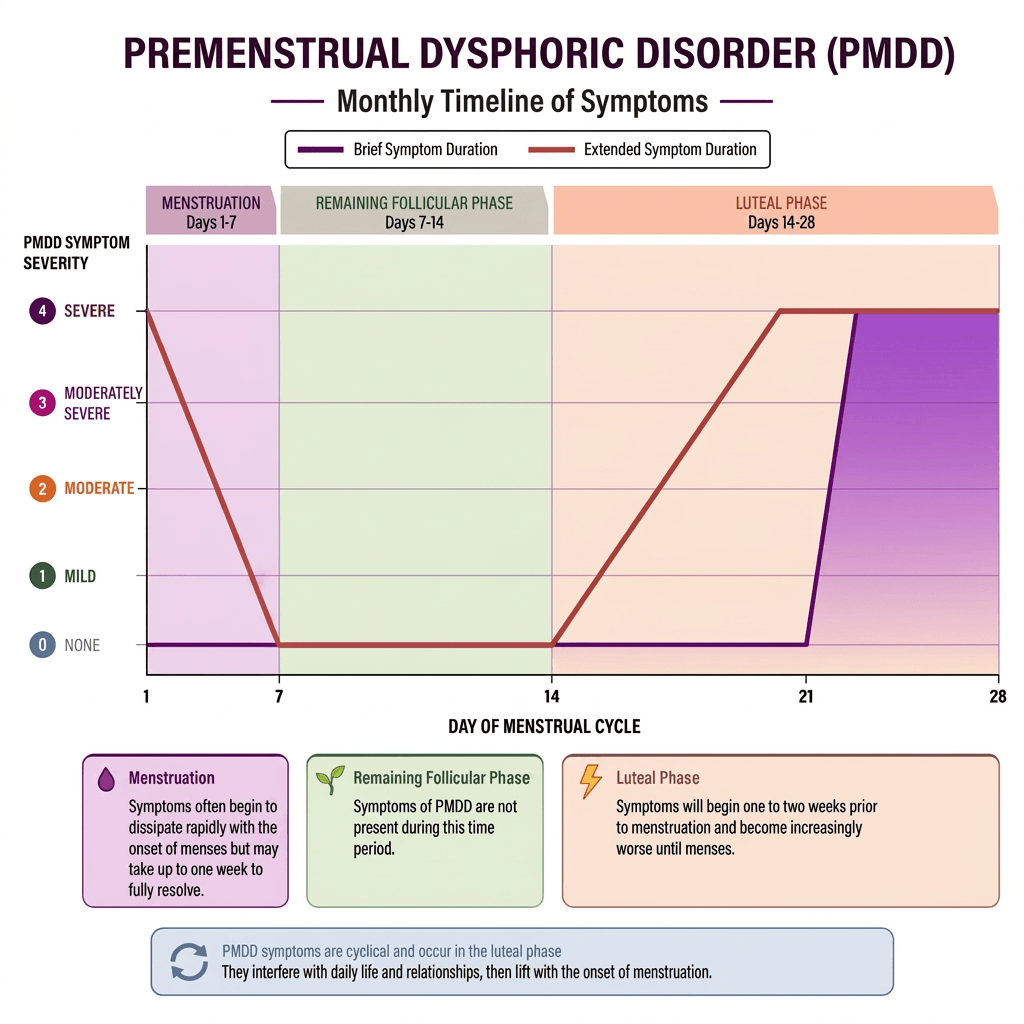
Diagnostically, PMDD symptoms must start one full week prior to menses but may begin up to 2 weeks prior to menses.¹ The symptoms must start to improve within a few days after menses and should be non-existent one week after menses.¹
The following graph shows 2 examples of when PMDD symptoms may occur, how long symptoms may last, and when they typically resolve. These are just examples; when symptoms occur, how quickly they peak, and how long they last can vary within some range. What does not vary for PMDD is that symptoms must start in the premenstrual (luteal) phase, they must begin to improve with menstruation, they must be absent no later then one week following menstruation, and they must remain absent until the next premenstrual phase.
PMS vs PMDD What Is the Difference?
In a nutshell, Premenstrual Dysphoric Disorder (PMDD) is a more severe form of Premenstrual Syndrome (PMS). To be more technical, there are several key differences:
- PMDD requires the presence of significant but temporary mood change. PMS may or may not cause a mood change.
- A PMDD diagnosis requires a minimum of 5 symptoms. Those with PMS may have any number of symptoms.
- More severe forms of PMS may cause some mild (but typically manageable) functional impairment. PMDD causes a clear level of distress and/or more significant functional impairment in work, school, or home life.
- PMDD often leads to conflict in interpersonal relationships due to emotional lability and temporary changes in mood. Individuals with PMDD may report feeling like a different person, regretting how they treated others, and spend significant time attempting to repair the damage caused once the symptoms of PMDD resolve.
How Common is PMDD or PMS?
PMDD was formally introduced as a diagnosable condition in North America in 2013 after being identified as a potential disorder needing more research as far back as the 1980's. As a relatively newer formal disorder, estimates on the prevalence of PMDD vary widely and are likely to change as our understanding of this disorder evolves. Right now approximately 1 out of every 20 women of reproductive age either has or will develop PMDD.² Additionally, it is estimated that approximately 1 out of every 26 women of reproductive age has experienced PMDD within the last 12 months.¹
PMS estimates are even more varied since PMS has very loose measurement criteria. Around 80% of women of reproductive age report experiencing at least one premenstrual symptom at some point.³ According to one study that seems to mirror typical results, 47.8% report symptoms that are somewhat debilitating and around 20% experience symptoms that cause some functional impairment in their life but do not meet the full criteria for PMDD.⁴
What is PME?
Premenstrual Exacerbation (PME) is the worsening of a pre-existing psychiatric disorder during the premenstrual phase of the menstrual cycle. PME does not cause any new symptoms and instead aggravates underlying, pre-existing symptoms. PMDD symptoms begin to improve with menses and should be gone within a week following menses at the latest. PME symptoms will still be present one week post-menses with lessened severity. It is important to distinguish PMDD from PME because PME treatment is aimed at the specific underlying disorder and that treatment is often different.
How is PMDD Diagnosed or Evaluated at Baltimore Psychiatry?
Often times when people seek treatment whether it is for PMDD or another disorder they are highly focused on their symptoms and specific potential diagnosis. This is completely understandable and arriving at an appropriate diagnosis is critical. However, fundamental to any good evaluation is starting with a broad overview to ensure important history is not missed before honing in on bothersome symptoms. In other words, evaluations that focus primarily on current symptoms often miss important historical or adjunct information. This can lead to a misdiagnosis or missing other important diagnoses or factors that would also need to be considered for optimal outcomes.
A PMDD diagnosis is made by collectively reviewing medical and psychiatric history, thorough interviewing, observation, and use of symptom charting tools. The symptoms an individual is experiencing, all potential causes for those symptoms, timeline of symptoms, and many other factors will be assessed. It is important to mention that PMDD cannot be definitively and reliably diagnosed after an initial evaluation alone. Like many diagnoses, arriving at a conclusive, definitive diagnosis takes some time. This does not necessarily mean that treatment options cannot be considered immediately but it would only be appropriate to consider treatment options that would cover all possible diagnoses being considered.
As part of the diagnostic process symptoms will be charted under professional guidance for at least 2 months. Studies have found that a retrospective reporting or summary of symptoms alone is not very reliable and leads to PMDD being over-diagnosed. A formal PMDD diagnosis also requires that symptoms have been present for most menstrual cycles over the last 12 months and have caused significant distress or otherwise interfered with work, social activities, and/or relationships.¹
Since thyroid disease can cause or worsen PMDD symptoms, evaluating thyroid function is important. If a patient has had thyroid function tested within the past year we can likely defer to those results. Otherwise, we may order a thyroid function test and possibly some other baseline labs too if warranted by the individuals history or symptoms. Hormone levels are not typically checked because abnormal hormone levels are not believed to cause PMDD. It is the sensitivity to normal hormone fluctuations that causes PMDD, not abnormal hormone levels.
Although this does not seem to be common knowledge, PMDD cannot technically be diagnosed when someone is using any type of hormonal birth control. Symptoms need to be evaluated and charted during natural menstrual cycles to get an accurate diagnosis. If someone is currently using hormonal birth control and it is better that they remain on it, treatment can likely still proceed. However, some of the more serious treatment options that are specific to PMDD should not be considered. Instead, only "umbrella" treatment options that cover any potential diagnosis the individual is suspected of having would be considered. For example, if a the psychiatric provider suspects either PMDD or PME of an anxiety disorder, an SSRI that is considered first-line treatment for both may be offered. On the other hand, a switch to an oral contraceptive that only treats PMDD would not be considered or recommended since that diagnosis had not yet been confirmed during natural cycles.
If you believe you may be struggling with PMDD and/or another related disorder schedule an evaluation for PMDD diagnosis and treatment here.
How is PMDD Treated at Baltimore Psychiatry?
After confirming the diagnosis we will still continue to carefully monitor and reaffirm PMDD is accurate with supporting data as an ongoing process. To avoid getting "tunnel vision" we will also continue to consider other potential diagnoses when warranted. We offer several treatment options depending on the variables in each individuals case and their personal treatment preferences. As is often the case in psychiatry, the best treatment is as unique as the individual themselves. The most effective treatment and the strength of treatment will vary from person to person. Many find major relief with treatment but no single treatment option will be ideal for everyone.
Selective Serotonin Reuptake Inhibitors (SSRIs)
SSRIs are considered a first-line treatment option to help alleviate symptoms of PMDD. Although they are referred to as "antidepressants," these medications are considered first-line treatments for a variety of disorders including PMDD, depression, anxiety, panic disorders, and more. These medications slow the reuptake of serotonin so that more is available for the brain to utilize. Serotonin is a neurotransmitter involved in maintaining a pleasant mood and helps promote a general feeling of well-being. When SSRI's are effective for PMDD they often work much quicker and at lower doses than they would for other disorders such as depression.
It is hypothesized that for some women PMDD likely causes rapid serotonin depletion leading to mood related symptoms. This also potentially helps explain why serotonin based medications often work faster for PMDD than for other disorders. Serotonin and Norepinephrine Inhibitors (SNRIs) may likely be helpful in some cases as well. Antidepressants that do not influence serotonin levels have not been shown to be effective for PMDD. SSRIs are often good options in many instances due to their versatility; they can provide broad treatment of PMDD and many other common and potentially overlapping or co-existing disorders.
Other prescription medication options as an additional or alternative option to SSRIs or SNRIs.
There are a variety of medications that are supported by limited research and anecdotal feedback indicates they may be helpful. There is less evidence supporting these options so they are not first-line choices. In those cases where the potential benefit outweighs the potential risks these medications may be considered. These adjunct or alternative options are primarily oriented toward treating specific symptoms of PMDD or co-existing disorders in an individuals case.
Oral contraceptives specifically containing drospirenone and ethinyl estradiol
Combination birth control specifically containing drospirenone and ethinyl estradiol has received FDA approval for treating PMDD. Limiting or eliminating the number of placebo days on this birth control may also be beneficial for PMDD in some cases. This contraceptive is believed to be more likely to cause blood clots than other contraceptives and not everyone will be a good candidate. Baltimore Psychiatry only prescribes oral contraceptives primarily intended for PMDD or other mood disorders when safe and appropriate. We do not prescribe oral contraceptives that do not have a clear psychiatric indication as that is outside the scope of psychiatric practice.
Vitamin and mineral supplementation
Eating a well balanced diet is always the best way to obtain adequate vitamins and minerals naturally. More research is needed on all of these supplements but there is some limited early evidence to suggest that supplementation with calcium at specific doses may provide some modest benefit for PMDD symptoms. Less evidence suggests that vitamin b6 at specific doses may be a little helpful for PMS symptoms too. Numerous other vitamins and minerals have been posited as potentially helpful for PMDD such as magnesium, zinc, vitamin E, and vitamin D, but there is very little if any credible evidence to support these at this time. It is very important to remember that even vitamins and minerals can cause side effects and become dangerous if consumed in excess.
Herbal supplements
Supplements are not regulated in the same way as medicine and they are not Food and Drug Administration (FDA) approved to treat disorders. Some limited initial research shows that some herbal supplements may be effective in reducing symptoms of PMDD. These include but are not limited to: Chasteberry, Saffron, St. Johns Wort, and Kamishoyosan. These supplements have various degrees of evidence supporting their use for alleviating some symptoms of PMDD when taken at specific doses.
Depending on an individuals specific symptoms these may be a worthwhile option to try for those who are fundamentally opposed to prescription medications or those who have not responded well to medication trials. However, due to a lack of safety and interaction data we generally do not recommend that our patients mix prescription medications with herbal supplements and instead choose one route or the other.
The FDA considers herbal supplements a "food" product and regulates them very differently than medicine or prescription drugs. It is a very common misconception that herbs are "natural" so they must be safe. In reality, there is a broad spectrum of supplements that can vary from very safe to extremely dangerous. Even when the herbal supplement itself is regarded as safe, there are still many potential risks due to a lack of oversight and regulations. Some of these risks include but are not limited to: purity concerns, obtaining reliably consistent product or standardization of dose, and contamination (with heavy metals, bacteria, or fungus). Labels often include legal but deceptive marketing terms that do not mean what most seem to assume they do, such as "natural." It is generally advisable to be under the guidance of a licensed medical professional with some related knowledge to help mitigate these risks.
Can Lifestyle Modifications Help Treat PMDD?
Yes and many small individual changes can cumulatively make a big difference.
Remain cognizant of how choices will impact stress level, reduce or eliminate caffeine, eliminate alcohol, and follow good "sleep hygiene" practices. Exercise has been proven time and time again to greatly improve physical and mental health and research indicates it specifically helps with PMDD symptoms too. Those with a sedentary lifestyle and in particular those who work from home and/or at a computer all day should establish an exercise routine and/or find other ways of increasing physical activity.
While these may seem small or inconsequential in the grand scheme of things, they are not. With nearly any diagnosis individuals are always on the lookout for that one thing that will have a major impact and there is certainly nothing wrong with that. However, even with treatments that have a major impact it is always best to boost results with these adjunct and synergistic healthy lifestyle modifications. Sometimes there may not be that one major thing that helps and the best treatment is to piece together many small things that cumulatively have a large result. These are things anyone can do not only for PMDD but for overall health. The greater the room for improvement the greater the impact of these changes is likely to be.
What Causes PMDD?
While the occurrence of PMDD is believed to be the result of an abnormal sensitivity to normal hormone changes, the medical community does not yet know what causes this sensitivity. The exact cause(s) of PMDD remain unknown. Most research seems to support a strong genetic component; those with other family members who have PMDD or a history of other mood disorders are probably significantly more likely to develop PMDD.¹ While any woman of childbearing age may experience PMDD, it seems that most begin experiencing symptoms in their late 20's or older.
Stop struggling with PMDD; Schedule an evaluation for PMDD diagnosis and treatment now!
Severe Treatment-Resistant PMDD Treatment Options
The following are some other options for PMDD not offered at Baltimore Psychiatry. Due to practical and safety limitations in our telehealth setting, we do not offer these options or guidance regarding these options.
Hormone replacement therapy (HRT) HRT is often used to assist with symptoms caused by menopause but may sometimes also be considered earlier for PMDD. HRT is believed to work by stabilizing hormone levels. Since PMDD is caused by a sensitivity to normal hormone changes this treatment limits how significant the hormone change is to begin with. This can be very beneficial for some women while others may have difficulty tolerating it or find their symptoms may become worse.
Gonadotropin-Releasing Hormone (GnRH) receptor agonists. This treatment is intended to suppress the ovaries and induce hormonal menopause. This medication is typically administered as a monthly subcutaneous injection. Most studies conducted to date have been quite small and show that around half of women still do not respond to this treatment. This is surprising because PMDD should not be possible in menopause. For the other half this can be a highly effective treatment. Safety and efficacy of long-term use has not been studied well yet.
Surgical induction of menopause. The removal of ovaries is the necessary component but there are a variety of surgical options that may be recommended by the treating providers dependent on each individuals unique variables. PMDD should not be possible in menopause. Inducing menopause brings its own set of risks and challenges but these risks may be preferable and more manageable for those experiencing severe, treatment-resistant PMDD.
References:
¹ American Psychiatric Association. (2013). Premenstrual Dysphoric Disorder. In Diagnostic and statistical manual of mental disorders: DSM-5 (pp. 171–175).
² Halbreich, U., Borenstein, J., Pearlstein, T., & Kahn, L. S. (2003). The prevalence, impairment, impact, and burden of premenstrual dysphoric disorder (PMS/PMDD). Psychoneuroendocrinology, 28(3), 1–23.
³ Hantsoo, L., Rangaswamy, S., Voegtline, K., Salimgaraev, R., Zhaunova, L., & Payne, J. L. (2022). Premenstrual symptoms across the lifespan in an international sample: data from a mobile application. Archives of Women’s Mental Health, 25(5), 903–910.
⁴ Gudipally, P. R., & Sharma, G. K. (2023). Premenstrual Syndrome. PubMed; StatPearls Publishing.